cf7e About Clinic

About Clinic

"Mending your broken pieces, keeps you moving"
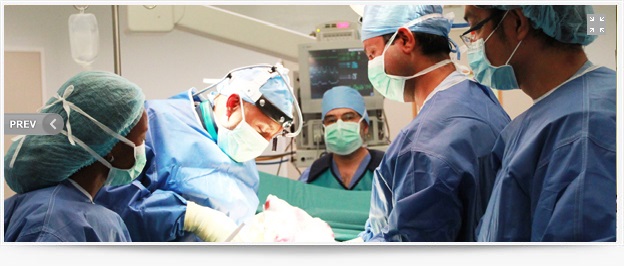
Al-Ahli Hospital's Orthopedic and Traumatology Department has brought together an internationally trained and highly experienced team of Consultant and Orthopedic Surgeons. Our Team is supported by experienced and well trained allied professionals.

The Orthopedic and Traumatology Department commenced its full time services in January 2009. The Department has grown rapidly since then with our team of Orthopedic Doctors increasing to 6 and appointment numbers increasing from 100 appointments per month in 2010 to 1600 appointments per month in 2012.

The Department offers a comprehensive service covering all aspects of Orthopedic Surgery. In collaboration with Physiotherapy, Chiropractor, xx and other departments within the hospital, we provide a multidisciplinary approach.

The principles of the Orthopedic Department are simple:-

  • Education and experience combined to ensure the staff of the Orthopedic Department are well equipped to assist our Guests on a day-to-day basis.
  • Team work and a team of staff united in one common goal; striving to continually improve Guest service, care and satisfaction.
  • Use of modern equipment and up-to-date surgical techniques to provide an extensive and fully inclusive service within the Orthopedic Department.

Our goal for 2013 is to recreate the Orthopedic and Traumatology Department as a Centre of Excellence within Al-Ahli Hospital. Our Team is each,individually committed to providing a first class service to each and every one of our Guests.

SERVICES OF THE DEPARTMENT:

The Orthopedic Department benefits from a team of western trained, highly experienced consultant orthopedic and spine surgeons. The department offers an extensive range of orthopedic services.

OUTPATIENT:

Our Outpatient Department runs clinics from 8.30am-8.30pm, Saturday to Thursday

Consultations:

An initial consultation will be arranged for you with one of our Orthopedic Doctors. The Orthopedic Doctor will examine you and recommend a course of treatment.

After the initial consultation a referral may be made for some treatment or diagnostic investigation, such as x-ray, MRI, blood tests, physiotherapy or chiropractic treatment. Once approval is received from your Insurance Company (where necessary) the relevant treatment or investigation will be arranged for you.Follow-up appointments will be arranged with yourOrthopedic Doctor, as necessary, to review test results and to discuss your future treatment programme, which might include surgery.

INPATIENT:

Roll over the image to select a body area and read more about the surgical procedures performed by our Orthopedic Doctors

Orthopedic surgery may be recommended by your Orthopedic Doctor, we call this elective surgery. You may need to be in the hospital for one day, being discharged home that same day, or you may need to be in hospital for a few days.

Many surgical procedures are performed by our highly experienced team of Orthopedic Doctors. At your consultation the Orthopedic Doctor will discuss all of the risks and benefits of the surgery so that you will be fully informed before your surgery. You will also understand what will be happening whilst you are in the hospital and what you will need to do once you have been discharged from hospital after your procedure.

Any surgery requires a commitment from you to manage your post-operative care. Your commitment to your rehabilitation is especially important in Orthopedic Surgery. Your Orthopedic Doctor will outline your post-operative recovery programme before your surgery and before you go home. This may include rest, regular exercise and stretching, physiotherapy, or wearing a special boot, a sling or a special splint. Exercise, whether undertaken by you at home or under the supervision of a Physiotherapist, is important in keeping your joints moving and building up muscle strength after surgery.

Special Guests and Corporate Guests Services

Clinics are available on Friday evenings 5pm-7pm for those Guests who do not require insurance registration or approval for their treatment but rather settle their accounts directly themselves by cash/card. Appointments can be arranged in advance or on the day, ¬please visit our Contact Us page

Have you considered our Corporate Guest Service providing orthopedic advice and management for all of your employees? Services include pre-arranged appointments and registration, medical reports, occupational health reports and access to our full range of orthopedic surgical services.Corporate Guest Services are available by arrangement - please visit our Contact Us page

DROP DOWN MENU - X-ray, Ultrasound, MRI or CT Scan:

This will be arranged for you in the Radiology Department of Al-Ahli Hospital. These investigations provide the Orthopedic Doctor with detailed images of your bones, joints and the internal organs of your body. This information is valuable to the Orthopedic Doctor in diagnosing your condition and determining if surgery is required. Your Doctor will discuss the investigation findings with you in full.

DROP DOWN MENU - Blood Tests:

These tests will be arranged for you in the Laboratory at Al-Ahli Hospital. In testing your blood, the Orthopedic Doctor is looking at calcium levels, looking for infection in the body, looking to see how healthy your bones are and for rheumatoid arthritis, osteoporosis, etc. Your Orthopedic Doctor will discuss the results of the blood tests with you in full at your follow up consultation.

DROP DOWN MENU – Physiotherapy:

Your Orthopedic Doctor might recommend a course of physiotherapy for you. This can be arranged in the modern, fully equipped Physiotherapy Suite here at Al-Ahli Hospital. The team of extensively trained and experienced Physiotherapists will help you through a programme of movements, manipulations and exercises to improve your posture, to regain function of muscles and joints, to improve the range of motion of a joint where there is joint stiffness and to strengthen your muscles. A course of physiotherapy might be between 6-10 sessions.

DROP DOWN MENU - Chiropractic:

Al-Ahli Hospital boasts an in-house chiropractic service with a highly skilled Chiropractor available for its Guests. Your Orthopedic Doctor may refer you for a course of treatment with the Chiropractor. In these sessions the Chiropractic uses a hands-on approach for spinal manipulation to realign the body's musculoskeletal structure. Manipulation may be used to release stiffness from a joint especially after a trauma (fall, accident) or through repetitive stress. Chiropractic manipulation can also help in pain management by strengthening the muscles of the body and also through advice/tips on how to take proper care of your body's musculoskeletal system.

Image taken from Fotosearch.com
http://www.fotosearch.com/csp423/k4236150/


Illustration of human body. Pointers to Shoulders, Spine, Elbows, Hands, Hips, Knees, Feetwith drop down menu to each

Shoulders

The human shoulder comprises three bones; the clavicle or collarbone, the scapula or shoulder blade and the humerus, the long bone of the upper arm. There are also associated muscles, ligaments and tendons. The shoulder joint is called the glenohumeral joint.

Our shoulders perform a wide range of movements of the arms and hands and control our lifting, pushing and pulling movements. Healthy shoulders are important in our day-to-day activities and maintaining a good range of movement is essential. The shoulder must be stable and strong enough to perform this large range of movements and it is due to this fine balance between movement and stability, that the shoulder is prone to problems.

Repetitivemovements, strain or injury can damage our shoulders causing pain and also reducing the range of shoulder movement you have. Many minor strains will resolve in time with the help of a course of anti-inflammatories and pain killers, with injection therapy or with a course of physiotherapy.

Major injuries to the shoulder include bone fractures and rotator cuff tears. In severe cases where pain medication, injections or physiotherapy have not helped, shoulder surgerymight be indicated.

Spine

The spine or backbone is called the vertebral column. There are 33 vertebrae (the bones of the spine) and they are divided into 3 sections - cervical, thoracic and lumbar. The function of the spine is to protect the spinal cord and its nerves, to provide the support for the body to stand upright and to allow for body movement.

Between each of the vertebrae sits an intervertebral disc that forms a joint allowing for a slight movement of the vertebrae and also acting as a ligament to hold the individual vertebrae together. They also serve as shock absorbers by cushioning the vertebrae.

The nerves of the spine carry motor, sensory and autonomic signals between the spinal cord and the body. These nerves carry information from the spinal cord throughout the body and then upto the brain. Pain is transmitted by nerves and in order to relieve the pain your Orthopedic Doctor may recommend injection therapy or surgery to numb, or anaesthetize, the nerve response.

The spine and the muscles of the back are very important in keeping you moving and it is therefore essential that you take good care of your back with good posture, regular exercise, maintaining a healthy weight, and ensuring sensible use, for example correctly lifting heavy or bulky items.

The majority of people will have back problems at some time in their lives, ranging from mild and occasional aching to acute painand immobility. Sometimes the back condition will last for only a few days or for a couple of weeks and the pain and stiffness will relieve with rest, pain killing medication and exercise or physiotherapy. Your Orthopedic Doctor might also recommend that you lose weight if you are overweight, as this will reduce the stress on your back.

More severe and persistent back pain can require attention, as there are many conditions that affect the back and need intervention from an Orthopedic Doctor. Your Orthopedic Doctor will examine your back and may recommend tests in the form of x-ray, MRI or CT scan. The Orthopedic Doctor may recommend a conservative course of treatment including a course of physiotherapy or offer you injection therapy. In more acute, persistent and severe cases where physiotherapy or injection has not helped, your Orthopedic Doctor may recommend that you have back surgery.

Elbows

The elbow is the joint, known as synovial hinge joint, of the arm enabling the arm to flex and extend. Over use, incorrect use and repetitive movements can cause pressure on the nerves associated with these actions. In this case, you might feel tingling and numbness to the fingers, weakness in the hand grip causing you to drop things and a general weakness of the forearm and hand. Your Orthopedic Doctor might recommend a test of the nerves, known as nerve conduction testing, to test their function. If there is pressure on the nerve, the Orthopedic Doctor might recommend elbow surgery to release these.

Hands

The human hand has 27 bones in total. 14 of these are phalanges, the bones of the fingers and thumb and the bone that connects the fingers and thumb and the wrist is know as the metacarpal, each hand having 5 metacarpal bones. Our hands are used for both gross motor skills, such as grasping a large item (a grapefruit) and fine motor skills, such as picking up a small item (a pencil). Our fingertips contact many nerve endings enabling our sense of touch.

As a result of the repetitive movements of and wear and tear our hands and fingers, many conditions can affect our hands. Symptoms of pain may be felt in the bones of the hand, of tingling and numbness in the fingers, of an inability to bend or move fingers or wrist, breaks in the bones of the hand or wrist and many more. Treatments for hand conditions might include conservative treatments such as rest from repetitive movements, wearing a splint, taking pain killing and anti-inflammatory medication, injection therapy and in severe or acute cases hand surgery may be indicated. Your Orthopedic Doctor will undertake a series of hand examinations and tests to find the cause of your symptoms and may also request x-ray or MRI imaging to view the condition of the bones and muscles of the hands.

Hips

The hip joint is known as the acetabulofemoral joint. It is where the femur, the long bone of the leg, meets with the acetabulum of the pelvis to form the hip joint. The hip joint supports the weight of our body in both a static posture (standing still) and a dynamic postures (walking, running, etc). The hip joint is very important in retaining balance.

Over years the surface of the hip joint may become worn resulting in pain and stiffness of the joint. After thorough examination and a number of tests, your Orthopedic Doctor may request an x-ray to view the condition of the hip. Treatment may initially be with physical therapy, pain killers and anti-inflammatory medication, losing weight and injection therapy. This alone may help to alleviate your symptoms.

Hip replacement surgery may be recommended if the joint has become badly damaged and if conservative treatments fail to provide relief.

Knees

The knee is the largest joint in the body. The knee joint, known as the synovial joint, connects the femur, the long bone of the leg to the tibia, known as the shin bone. The knee actually comprises two joints; the tibiofemoral joint, which joins the tibia to the femur, and the patellofemoral joint, which joints the kneecap to the femur.Our knees bear tremendous pressure loads as they provide their flexible movement. When we walk our knees support 1.5 times our body weight, when we climb stairs the knees support 3-4 times our body weight and when we squat our knees support about 8 times our body weight.

Arthritis is the most common disease that affects the bones of the knees and it is a progressive degenerative disease. There are many injuries possible to the ligaments of the knees, especially sporting injuries.Symptoms may include pain (can be of sudden onset), swelling, stiffness and difficulty in bending the knee. Climbing stairs, walking long distances and kneeling may also become difficult.

After thorough examination, your Orthopedic Doctor may recommend x-ray or MRI scan of the knee to view the internal structures of the knee. Treatment might initially be pain killing/anti-inflammatory medication, exercise therapy to strengthen the quadriceps muscles (the large muscle at the front of the thigh), losing weight if you are overweight and injection therapy. In acute and persistent cases your Orthopedic Doctor might recommend knee arthroscopy or knee replacement surgery.

Feet

The human foot and ankle contains 26 bones, 33 joints and more than 100 muscles, tendons and ligaments. The foot is generally divided into 3 sections; the forefoot, midfoot and hindfoot. The foot is very flexible enabling us to jump, walk and run and withstands hundreds and thousands of tons of force each day, as we perform these actions.

It is important that we take good care of our feet. The type of footwear we wear greatly affects our feet, for example wearing high heeled shoes, wearing badly fitting shoes or wearing sneakers all day. Appropriate footwear that is well fitting and supportive of the foot can prevent a number of foot problems.

There are many orthopedic conditions affecting the feet affecting the muscles, the tendons and the bones of the feet. Symptoms may include pain in the joints, swelling in the feet generally and in particular the joints, numbness, bony growth on the bones of the foot and pain on weight-bearing. After thorough examination and a number of tests, your Orthopedic Doctor may request an x-ray or MRI scan to view the internal structures of the foot. Treatment may initially be with rest, pain killers and anti-inflammatory medication and injection therapy. Your Orthopedic Doctor might also recommend that you wear a particular type of shoe or that you wear a type of insole in your footwear to support your feet.This alone may help to alleviate your symptoms. If theseconservative treatments do not help your condition your Orthopedic Doctor may recommend foot surgery.

Sporting Injuries:

Sporting and exercise related injuries to the knee are some of the most common. Often injuries occur when we do not warm up or stretch appropriately before we exercise and also from accidents during our exercise. Sporting injuries can take many forms including muscle sprains and strains, dislocated joints, broken bones and tears of the ligaments and tendons of the joints.

Sportsmen and women may sustain an injury to the knee ligaments; the anterior cruciate ligament (ACL), the medial collateral ligament (MCL) and the posterior cruciate ligament (PCL). These types of injury often require surgery to repair the tear.

Symptoms would include severe pain in the knee causing you to fall or limp, hearing a "popping" sound and feeling the knee give way at the time of injury, inability to flex or extend the knee and a swelling of the knee.

SURGICAL PROCEDURES:

Total joint replacement of hip or knee, through a minimally invasive surgery technique

Hip and knee joint replacement surgery is a hugely successful surgery in the treatment of degenerative joint disease (hip osteoarthritis), hip arthritis and knee arthritis. Joint replacement surgery brings a great improvement in function and relief of pain.

After initial consultation your Orthopedic Doctor will arrange an MRI scan to confirm the disease and degeneration within the joint. The MRI will confirm if surgery is necessary and appropriate.

If your Orthopedic Doctor recommends surgery, a minimally invasive surgery technique will be used. This type of surgery has proven benefits including a shorter hospital stay, less trauma,less scarring and a quicker healing time.

Arthroscopic Procedures for shoulder and knee

Injury and degenerative disease of the knee or shoulder can damage the bones and internal muscles, tendons, ligaments and cartilages. Arthroscopy is used to diagnose injury or disease within the joint.

A small camera (pen sized) is inserted to view the joint and the Orthopedic Doctor can see the condition of the joint, cartilage and ligaments within the knee.Damage within the knee can then be repaired as necessary and in the use of this technique many conditions can be treated, including

Shoulder:-

  • torn cartilage
  • rotator cuff tears and rotator cuff tendinitis
  • impingement syndrome
  • stiff and frozen shoulder
  • loose bodies within the joint (either of bone or cartilage)

Knee:-

  • meniscal tears (a tear of the cartilage)
  • anterior cruciate ligament tear
  • chondromalacia (a degeneration of cartilage cushion due to poor alignment of the kneecap)
  • loose bodies within the joint (either of bone or cartilage)
  • arthritis and degeneration the joint

Elbows and Hands

Many conditions affect our hands and elbows causing pain, weakness in in the wrist, weakness in handgrip, numbness in the fingers and thumb and pain in the elbow, wrist and hand. Injury, repetitive action and overuse can cause inflammation in the joints and muscles of the arms and hands.

We offer a full treatment service for such as:-

Elbows

  • Golfer's elbow (medial epicondylitis) is a condition causing pain over the inside of the elbow. In spite of its name, this condition does not only affect golfers. Often a course of anti-inflammatory medication combined with a period of rest can alleviate the symptoms but treatment for severe and persisting conditions can include exercise therapy, injection and surgery.
  • Tennis elbow (lateral epicondylitis) is a condition causing pain over the outside of the elbow. Tennis elbow is a condition resulting from a strain, from repetitive use or from an injury to the elbow. As with Golfer's elbow a conservative course of treatment might include anti-inflammatory medication and a course of physiotherapy to settle the symptoms and this can be a process taking up to one year. Your Orthopedic Doctor might also recommend injection treatment to relieve the pain symptoms. If conservative treatment does not help your symptoms, your Orthopedic Doctor might recommend surgery.
  • Cubital tunnel syndrome is a condition where there is pressure on the nerve at the elbow. This can be painful, especially if you lean on your elbow and you may also notice numbness or tingling of the little and ring fingers of the affected arm. Often symptoms are bad a night and more so if you lie or sleep with your arm bent tightly, you may wake with a totally numb feeling in your arm and be unable to move it for a few minutes. Initial treatment of this condition might include injection, physiotherapy and activity modification. This can work in lots of cases but sometimes surgery is required to release the nerve.
    Hands
  • Carpal tunnel syndrome is a condition affecting the wrist and hand. Actions such as repeated use of a computer keyboard, playing musical instruments, playing sports such as squash and tennis, using machinery, hand writing and many more can cause "pinching" of the nerves between the wrist and the hand. Symptoms may include general clumsiness causing you to drop things and problems with fine finger movements, such as buttoning shirts. Your Orthopedic Doctor might recommend testing of the nerve responses and if carpal tunnel syndrome is confirmed, may recommend surgery.
  • Ganglion or cyst is a fluid filled sac that can form around joints, often at the wrist. They can be as small as a pea or as large as a golf ball. Sometimes they are quite painful depending on where they are sited, as they can be banged and knocked in our day-to-day activities. Treatment is only recommended if the ganglion or cyst is large, painful or causing difficulty. Often these cysts will go away in time without intervention. Treatment options include withdrawing the fluid (called synovial fluid) with a syringe or the cysts can be removed with surgery. Unfortunately even with surgery ganglia are prone to recur.
  • DeQuervains tenosynovitis is a painful condition that affects the thumb. It is brought on by irritation and inflammation of the tendons of the wrist at the base of the thumb. As with many hand, wrist and elbow conditions repetitive movements can cause this condition. A common symptom is usually pain over the outside of the thumb, which can be acute with sudden onset or gradually increasing in tenderness. This pain might affect both the thumb and the forearm and be severe with movement of the hand and thumb, such as grasping or twisting. Your Orthopedic Doctor might recommend resting from activities which cause the symptoms, anti-inflammatory medication, to wear a thumb splint for a few weeks or injection therapy. This treatment plan alone might reduce or clear your symptoms over a few weeks however if the pain persists your Orthopedic Doctor might recommend surgery.
  • Dupuytren'sdisease/Dupuytren'scontractureis a condition causing the fingers of the hand to curl into the palm. This condition most commonly affects the ring and little fingers and is more common in men. Symptoms include the development of fleshy lumps, called nodules, in the palm which over time may grow in size. Over a period of time you might also notice a thickening, a forming of benign fibrous tissue, under the skin forming cords. As the nodules contract (shorten) the affected finger(s) begin to curl (flex) toward the palm and you may not be able to flex the affect finger(s). If untreated the affected finger(s) may become permanently locked in this flexed position. Treatment of this condition is usually surgery to release the bands of fibrous tissue and straighten the finger. In most cases it is possible to fully straighten the finger. Post-operatively you will be required to exercise the fingers to maintain the straightened position and wear a splint. This follow-up treatment is essential to keep the finger(s) mobile and straight.
  • Trigger finger, known as stenosing tenosynovitis, can affect one or more fingers. The tendons of the finger(s) can become locked after they have been bent into the palm and the finger may have to be straightened manually. The symptoms include pain, stiffness, a clicking of the joint as you move the finger and you may also notice a nodule, a small lump of tissue, at the base of the affected finger. This condition may result in difficulty in using the affected hand and the finger may become increasing difficult to straighten out.Your Orthopedic Doctor will examine you hand and in the first instance may suggest conservative treatment, that is rest, pain and anti-inflammatory medications and wearing a splint to the affected finger(s). If this course of treatment does not help, your Orthopedic Doctor might suggest surgery to release the affected tendon and allow the finger to move freely again.
    Foot and ankle
  • Bunionectomy/hallux valgus correction/Osteotomy. The big toe is called the hallux. When the big toe curves towards the little toe this is called valgus. The movement of the big toe causes a bony growth deformity of the joint of the toe and this is called a bunion. This condition can be very painful, making wearing shoes and walking difficult. The type of footwear you wear can affect this condition and particularly women who wear high heeled shoes can suffer from this condition. Symptoms, as well as the bony growth, might be a burning sensation in the joint at the base of the toe and the symptoms of pain and burning may be relieved with rest.

    This condition may also include the 2nd toe, as the big toe can cross over the 2nd toe changing its alignment also.

    Treatment for this condition might be to modify the style of footwear you choose and wear flat and wider fitting footwear. Pain killing and anti-inflammatory medication will help with the symptoms. You could also try splint that you wear on your big toe, which can help to straighten the toe and relieve the pain. Your Orthopedic Doctor might also recommend injection therapy to relieve the pain. In cases where the conservative treatments have not relieved your symptoms, your Orthopedic Doctormay recommend surgery in the form of a Bunionectomy, Akins Osteotomy or Scarf Osteotomyto reshape the joint and make the big toe straight again.

  • Achilles tendonitis is commonly the result of a sporting injury, although it can also be the result of wearing shoes that do not fit properly causing you to walk awkwardly. The Achilles tendon connects the back of the heel and the calf muscle. Achilles tendonitis is an inflammation of the tendon. Symptoms may include aching/pain behind the heel, stiffness, swelling and sometimes redness or burning around the heel area, all of which might be worse after activity. Your Orthopedic Doctor will examine your foot and might recommend that firstly you try rest, ice packs, pain killing and anti-inflammatory medication and special heel pads to reduce the stress on the tendon. Physiotherapy and injection therapy may also be suggested. In most cases this treatment regime will reduce and eliminate your symptoms but when the condition is persistent and acute, your Orthopedic Doctor might suggest surgery to repair the damaged Achilles tendon.
  • Morton's neuroma is a condition that affects the nerves between the toes, in most cases between the 3rd and 4th toes. If you have this condition you might experience pain on weight-bearing, even after standing for only a short while. This pain might be constant or might feel like shooting pain into the toes. You may have a feeling of having a small pebble in your foot. You may also feel some numbness in the toes. The pain in the toes may become worse if you wear tight fitting shoes. Your Orthopedic Doctor will examine your feet and may request and MRI scan or ultrasound scanto confirm the diagnosis.
  • In a majority of cases Morton's neuroma can be relieved with non-surgical treatment and this may include modifying the type of footwear you usually wear to avoid high heels, narrow shoes or wearing special heel pads in your shoes, a programme of exercises to stretch the calf muscles and injection therapy. If this treatment programme does not work, your Orthopedic Doctor might recommend surgery to free the affected nerves.
  • Plantar fasciitis is a painful inflammation of the plantar fascia, which is a thick band of tissue stretching from your heel to your midfoot bones. The plantar fascia supports the arch of the footand can act as a shock-absorber for the foot. If you have this condition you might feel pain and stiffness in the bottom of your heel. You may have pain when you rise to stand after getting out of bed in the mornings and take your first steps. You may feel a burning sensation in the sole of the foot. If you stand for a while you may find that your feet are painful and also when you climb stairs. The pain may become gradually worse over time or it may start suddenly with severe pain after activity. This condition can be treated conservatively but symptoms make take upto one year to resolve completely. Your Orthopedic Doctor might initially recommend you try special insoles for your shoes to wear under your heel. You might try pain killing and anti-inflammatory medication to relieve the pain. Your Orthopedic Doctor might recommend a course of exercise therapy to stretch the foot or recommend an injection to the foot to relieve the symptoms. Your Orthopedic Doctor might also recommend a course of shock wave therapy to alleviate the symptoms of pain.

Extracorporeal shock wave therapy (eSWT).

ESWT treatment is a great option for sufferers of chronic pain. The benefits of ESWT include a significant reduction in pain for a high percentage of patients receiving this treatment with many becoming completely free of pain.

ESWT is routinely carried out within the Orthopedic Department. It is a procedure directing shock waves directly to the area of pain and is a non-invasive treatment that requires no anesthesia, medication or surgery.It is a treatment thought to stimulate healing of the condition it is being used to treat.

Many conditions can be treated with ESWT including:-

  • Plantar Fasciitis and Achilles tendinitis of the feet
  • Capsulitis and calcific tendinitis of the shoulders
  • Tennis elbow, Golfer's elbow,

A course of 3-6 sessions of ESWT will be requested by your Orthopedic Doctor and these will be carried out on a weekly basis. A session will usually last less 15-30 minutes.

Pediatric orthopedic services:-

Spinal Surgery

There are many procedures performed by the Orthopedic Department for minimal access spine surgery, known as key-hole surgery. The surgery is perform though only small incisions using high-tech instrumentation which means that you will have a shorter stay in hospital, reduced post-operative pain and a quicker recovery/healing time.

Before considering spinal surgery, your Orthopedic Doctor will undertake a thorough examination of your spine, your posture and your range of movement. Your Doctor will consider the levels of pain you have, your mobility, your ability to undertake your daily activities and the quality of life you have with your condition. The Orthopedic Doctor may request an MRI scan to view the spine and confirm a diagnosis.

Many surgical procedures are performed through a minimally invasive technique:-

  • Discectomy- A disc has two parts; a soft center and a surrounding tough outer ring. If the tough outer ring tears the soft inner can protrude or bulge out. This is a sign of wear and tear of the disc. When the disc protrudes or bulges out, it can cause significant symptoms in the form of pain, numbness and general weakness. The pain can be quite severe and debilitating making walking, standing and bending all quite uncomfortable. A discectomy is a procedure to remove an injured or herniated disc.
  • Dynamic stabilizationor Instrumented spinal fusion surgery is performed to reduce the pain in your back by reducing the mobility of the affected vertebrae. The vertebrae are fused together with an implant (a graft, a rod or special screws) that replaces the injured intervertebral discs.
  • Decompression or Percutaneous decompression surgery aims to manage pain by relieving the pressure on the nerves of the spine. The Orthopedic Surgeon will remove a small amount of bone (this procedure is known as a laminectomy) and/or disc to give more room within the spinal canal and to relieve the pressure over the nerve.

Your Orthopedic Doctor might perform these types of surgery for conditions such as:-

  • - Spondylolysis, a fracture or defect of the vertebrae often as a result of a stress fracture. This type of injury is common for such as gymnasts, power weight lifters, sportsmen and women.
  • - Instability, with our natural aging process the intervertebral discs can lose some of the water content and become stiff and flattened. In this state they lose some of their shock absorbing qualities. With this change in the intervertebral discs the vertebrae become unstable and can begin to move slightly back and forth irritating the nerves associated with the spinal column.
  • - Spondylolisthesis is when one vertebrae moves forward to rest on top of another vertebrae and pinching the nerves. This condition can be as a result of wear and tear of the vertebrae or due to an injury.
  • - Spinal stenosis is a condition where there is a narrowing of the spinal canal. This may be as a result of a bony spur (a growth of bone) occurring and causing a narrowing, which puts pressure on the nerves. This condition may cause pain in the back that radiates down the legs.

Back pain Management

Your Orthopedic Doctor will request an MRI scan be taken of your spine to give an internal picture of the bones, joints, discs and nerves of the spine. This will help in diagnosing the root of your pain. Procedures to help manage back pain:-

  • Selective Nerve Block – when a nerve is inflamed or irritated it can cause pain in the back radiating down the legs. A nerve block is an injection to the affected nerve root to numb or anaesthetize the nerve and relieve the symptoms of back pain and leg pain. In most cases, this injection will provide a long term total relief from pain.
  • Caudal Epidural Injection - The epidural space runs along the outer covering of the spinal cord from the base of the skull down the entire length of the spinal canal. Nerve fibres carrying pain signals to the spinal cord and upto the brain pass along this canal. This treatment involves an injectionof medication to the bottom of the spine that will numb or anaesthetize the nerves. This treatment used in the management of low back pain due to inflammation caused by such as arthritis, injury, sciatica. The effect of this injection provides is a short term relief and allows the Orthopedic Doctor to diagnose more accurately your condition before considering a surgical option. This procedure is usually done as a day procedure and you will be able to leave the hospital the same day.
  • Facet Joint Injection – a facet joint is a small linking joint in the spine. The facet joints can become painful with arthritis, mechanical stress of the back or with an injury to the back. Your Orthopedic Surgeon will inject medication, usually under x-ray guidance, into the facet joint that will numb the joint and so relieve the pain. This treatment will provide short term relieve from pain. It is usually done as a day procedure and you will be able to leave the hospital the same day.

    The effect of this injection provides is usually short term relief but this treatment allows the Orthopedic Doctor to diagnose more accurately your condition. If you respond well to this short term treatment you will be a good candidate for radiofrquency ablation.

  • Radiofrequency ablation is particularly used for those who have benefitted firstly from injection therapy, which provides only short term pain relief. Heat is applied to affected nerves to destroy the nerve and thus its ability to send signals to the brain. This is a very effective method of giving longer term pain relief to back pain sufferers. It is usually done as a day procedure and you will be able to leave the hospital the same day.
0